Roads built over particularly challenging soil conditions, whether soft, unstable, or highly variable subgrade, present engineering challenges that geogrid for road stabilization applications specifically address, offering reinforcement that helps ensure adequate pavement performance despite difficult underlying conditions.
Understanding Why Certain Soils Present Road-Building Challenges
Soft, saturated, or highly variable soil conditions can struggle to provide the consistent, stable support road pavement requires, potentially leading to premature settlement, rutting, or structural failure if the road is constructed without addressing these underlying subgrade limitations.
How Stabilization Reinforcement Addresses This Challenge
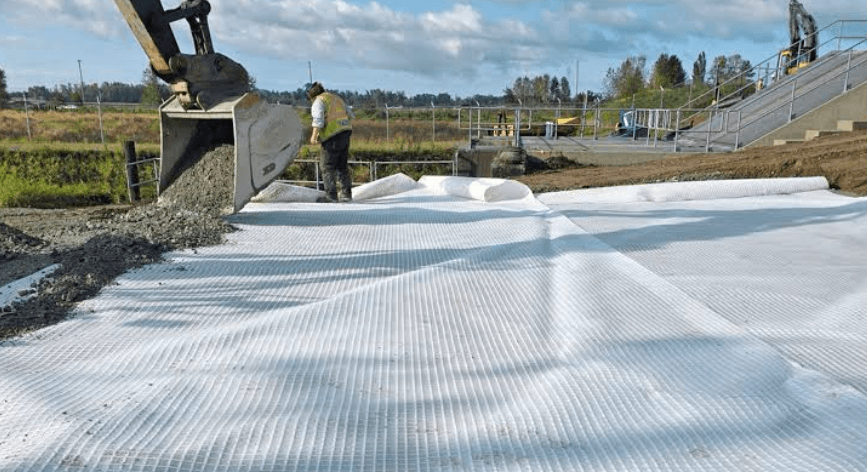
Geogrid for road stabilization works by creating a mechanically reinforced layer that helps distribute loads more effectively across challenging subgrade conditions, essentially compensating for inadequate natural soil support through engineered reinforcement rather than requiring complete soil replacement or other more disruptive remediation approaches.
Site-Specific Assessment as the Starting Point
Successful stabilization projects begin with thorough geotechnical assessment, understanding the specific soil conditions and their limitations, since this assessment directly informs appropriate geogrid product selection and installation approach for your particular challenging site conditions.
Comparing Stabilization to Alternative Approaches
While geogrid stabilization offers genuine value for many challenging soil situations, understanding how it compares to alternative approaches, including soil replacement or other ground improvement techniques, helps ensure you’re selecting the genuinely most appropriate and cost-effective solution for your specific site conditions.
Installation Considerations for Stabilization Applications
Proper installation, including correct placement depth relative to the problematic soil layer and appropriate compaction technique, significantly affects whether the stabilization reinforcement actually delivers its intended performance benefit for your particular challenging site.
Transportation engineers and contractors can find detailed technical guidance through this resource on geogrid for road stabilization applications for challenging soil conditions.
Long-Term Performance Monitoring
Roads built with stabilization reinforcement over challenging soils benefit from ongoing performance monitoring, particularly in the years following construction, helping identify whether the stabilization approach is genuinely performing as intended or whether additional attention might eventually become necessary.
Cost Considerations for Challenging Sites
While stabilization reinforcement adds construction cost, comparing this investment against the alternative of either avoiding construction on challenging soil entirely or facing more significant remediation costs after premature pavement failure often reveals genuine value for appropriately challenging site conditions.
Final Thoughts
Geogrid for road stabilization offers genuine engineering value for roads facing challenging soil conditions, providing reinforcement that helps ensure adequate pavement performance despite subgrade limitations that would otherwise compromise road construction and long-term durability.
See also: What Company Secretarial Services Hong Kong Businesses Need to Know
Frequently Asked Questions
How do I know if my road project genuinely needs stabilization reinforcement?
Thorough geotechnical assessment of your specific soil conditions provides the foundation for determining whether stabilization reinforcement is genuinely necessary for your project.
Does stabilization reinforcement work for all types of poor soil conditions?
While effective for many challenging conditions, some soil situations may call for alternative or complementary approaches, making site-specific engineering assessment important.
How long does properly installed stabilization reinforcement typically last?
This varies by specific conditions and product selection, but properly designed and installed systems are generally engineered to perform for the pavement’s full intended service life.