Augmented Reality (AR) applications in retail are transforming traditional shopping dynamics. By incorporating virtual try-ons and interactive displays, retailers enhance customer engagement and satisfaction. These technologies bridge the gap between online and physical shopping experiences, personalizing the journey for each consumer. As AR continues to evolve, its potential impact on consumer behavior and retail strategies remains a critical area for exploration. What further innovations could emerge from this intersection of technology and retail?
Virtual Try-Ons: Revolutionizing Fitting Rooms
As retailers seek innovative ways to enhance customer experience, virtual try-ons have emerged as a transformative solution for fitting rooms.
These virtual fittings allow customers to visualize how garments will look without physical trials, significantly boosting customer satisfaction.
Interactive Product Displays: Enhancing Customer Engagement
Building on the advancements introduced by virtual try-ons, interactive product displays are redefining how consumers engage with products in retail environments.
These displays leverage interactive kiosks to create immersive storytelling experiences, allowing customers to explore product features dynamically.
Augmented Shopping Experiences: Merging Online and Offline
While traditional shopping methods often create a distinct divide between online and offline experiences, augmented reality (AR) is effectively bridging this gap, transforming how consumers interact with products.
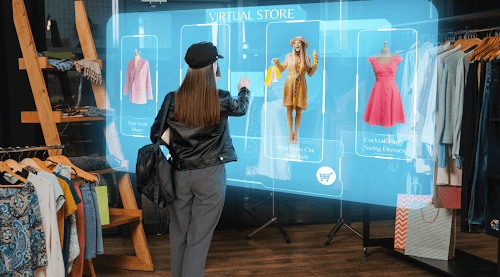
By creating immersive environments within virtual stores, AR allows shoppers to visualize products in real-world contexts, enhancing decision-making.
This innovative approach fosters a seamless blend of both worlds, offering unparalleled freedom and convenience in the shopping experience.
See also: Applications of Virtual Reality in Gaming
Personalized Recommendations: Utilizing AR for Tailored Experiences
The integration of augmented reality in retail not only enhances the shopping experience but also paves the way for personalized recommendations that cater to individual consumer preferences.
Through personalized ads and immersive storytelling, retailers can create engaging narratives that resonate deeply with consumers. This tailored approach fosters a sense of connection, empowering shoppers to explore products that align perfectly with their unique tastes and desires.
Conclusion
In the dazzling realm of retail, augmented reality emerges as a transformative sorcerer, conjuring a shopping experience that transcends the ordinary. With virtual try-ons and interactive displays, customers are not merely engaging; they are embarking on a fantastical journey where the boundaries of reality blur and imagination reigns supreme. This technological renaissance not only elevates satisfaction but also reshapes the very fabric of commerce, turning mundane transactions into exhilarating adventures that redefine consumer expectations and aspirations.